
Is BPC-157 Safe? What a Functional Dietitian Wants You to Know
If you’ve spent any time in the wellness or biohacking world lately, you’ve probably heard of BPC-157. It’s all over podcasts, Reddit threads, and Instagram reels. And the number-one question people Google? Is BPC-157 safe?
As a functional dietitian and certified LEAP therapist who works with clients on root cause healing every single day, I want to give you a real answer — not a fear-based one, and not an over-hyped one. Just the actual science, explained in plain language.
Let’s get into it.
First — What Is BPC-157?
BPC stands for Body Protection Compound. The 157 refers to the specific sequence of 15 amino acids that make up this peptide. Those 15 amino acids are derived from a protein naturally found in human gastric juice — meaning your stomach already makes a version of this.
Let that sink in for a second. This is not some foreign chemical invented in a lab. It is a synthetic mirror of something your body already produces. Researchers isolated this specific fragment and found that it carries remarkably powerful healing properties.
Researchers have been studying it since the early 1990s, primarily out of Zagreb, Croatia, and have accumulated decades of preclinical data across multiple organ systems. The body of research is significant — and the findings are consistently pointing in the same direction: this compound protects and heals tissue at a remarkable level.
So — Is BPC-157 Safe?
Here is the honest, nuanced answer: In all preclinical safety evaluations to date, NO dangerous dose has been found.
Researchers have not been able to identify a toxic threshold — meaning they have not found the dose that causes harm in a single animal, let alone in a large population. That is significant. Preclinical safety studies looked at single-dose toxicity, repeated-dose toxicity, genetic toxicity, and even embryo-fetal toxicity across mice, rats, rabbits, and dogs.
This is not a small thing. Most compounds — even ones considered “safe” — have a known LD50, which is the dose that causes harm in 50% of a population. Researchers have not been able to establish one for BPC-157. They cannot find the dangerous dose. Tylenol can’t even say that…
There is a concept in toxicology and pharmacology called the no observed adverse effect level — or NOAEL. For BPC-157, the NOAEL across all studies conducted so far is extraordinarily high. The compound shows what researchers describe as a desirable safety profile, with only a few side effects reported following administration in all the preclinical work that exists.
I want to be clear: large-scale human clinical trials have not yet been completed. That is the honest caveat. The FDA has not approved it, and it remains investigational for human use. But “we don’t have enough human data yet” and “it’s dangerous” are two very different statements — and the wellness industry often conflates them.
When you apply for human trials, you start with a compound that has passed preclinical safety thresholds. BPC-157 has done exactly that.
What Does BPC-157 Do in the Body?
The short answer: it accelerates healing and protects tissue, across almost every organ system studied. Here is a breakdown of the main mechanisms.
It Promotes the Growth of New Blood Vessels
BPC-157 activates the VEGFR2 pathway and stimulates nitric oxide production through what is called the Akt-eNOS axis. In plain language: it tells your body to build new capillaries into damaged tissue. This is called angiogenesis. When you injure a tendon, a ligament, or a muscle, the problem is often that blood flow to the area is poor. BPC-157 helps restore that blood supply — which is what actually allows healing to happen.
It Activates Fibroblasts
Fibroblasts are the cells that build connective tissue. They produce collagen, elastin, and the structural scaffolding that holds you together. BPC-157 stimulates fibroblast activity — which means more collagen production, faster tissue repair, and better structural regeneration in tendons, ligaments, muscle, and bone.
It Calms Inflammation at the Root
Chronic, low-grade inflammation is at the center of almost every condition I work with — gut dysfunction, hormone imbalance, autoimmunity, fatigue. BPC-157 downregulates inflammatory markers including IL-6 and TNF-alpha. It does not shut inflammation off (which would actually be harmful), but it modulates it — helping your body move through the inflammatory phase and into repair.
It Protects the Gut Lining
This is where BPC-157 gets really interesting from a gut-health perspective. Remember — it is derived from gastric juice. This peptide is naturally stable in stomach acid. It does not break down. It has shown remarkable protective effects on the gut mucosa, including healing ulcers, reducing damage from NSAIDs like ibuprofen and aspirin, and protecting against stress-induced gut injury.
For my clients dealing with leaky gut, irritable bowel, or gut damage from years of medication use or high stress — this is one of the most compelling areas of research.
BPC-157 and Leaky Gut — What You Need to Know
Leaky gut (intestinal hyperpermeability) is exactly what it sounds like. The tight junctions between your gut cells loosen, allowing undigested food particles, bacteria, and toxins to slip into your bloodstream. Your immune system sees them, mounts a response, and that systemic inflammation shows up as everything from brain fog and fatigue to skin issues and food sensitivities.
BPC-157 has demonstrated consistent protective effects on the gut mucosa — the lining of your digestive tract. It has been shown to heal gastric ulcers and protect against new mucosal damage, reverse NSAID-induced gut injury, protect against stress-induced gut breakdown, demonstrate efficacy even at microgram and nanogram doses, show stability in gastric juice, and support repair of inflammatory bowel conditions in preclinical models.
This is not a symptom-chasing tool. It is working on the actual structure of the gut lining — which is root cause medicine. That is what I care about.
One of the things that makes BPC-157 unique among gut-healing compounds is that it was effective at very low doses in research. Unlike many compounds that require high concentrations to produce an effect, BPC-157 has demonstrated activity at microgram — and even nanogram — doses. That is a meaningful signal about its potency and mechanism.
BPC-157 and Tissue Repair — The Case for Injection
BPC-157 can be taken orally or sublingually, and for gut-specific goals, oral administration makes a lot of sense — you are delivering it directly to the tissue you are trying to heal. But when it comes to deeper tissue repair — tendons, ligaments, muscles, joints — injection is where the evidence is strongest.
Here is why: injecting BPC-157 subcutaneously (under the skin) or near the site of injury allows it to be delivered directly into the tissue that needs it. It bypasses the digestive process entirely and enters the bloodstream at higher bioavailability. This is especially important for poorly vascularized tissues like tendons and ligaments — the exact places that are slowest to heal and most frustrating for anyone dealing with chronic injury.
Preclinical research shows that BPC-157 promotes healing in tendons, ligaments, muscle, and bone — and that injection near the site of injury produces the most robust results. The compound also demonstrates what researchers call neuromuscular stabilization, which means it supports the connection between the nervous system and the muscle — critical for functional recovery, not just structural repair.
For clients who are athletes, who have had injuries that just will not resolve, or who are dealing with connective tissue weakness (which often connects back to gut dysfunction, mineral deficiency, or chronic inflammation) — this is why BPC-157 has captured so much attention in the functional medicine and regenerative space.
What About the Quote You Heard — About It Being Like Nothing Else?
If you have heard BPC-157 discussed on major podcasts — including discussions about how researchers cannot find a dangerous dose — you are hearing a reflection of the actual preclinical toxicology literature. The idea that “they have not been able to find the dose that is harmful in a single individual, let alone a population” is a genuine reflection of where the safety data stands right now.
It is a compound that appears to be, in the words of the research, remarkably well tolerated — with a safety margin that is unusually favorable compared to most compounds that make it this far in the research pipeline.
That does not mean you should self-administer anything without guidance. Source matters enormously. Purity matters. Dosing matters. And working with a practitioner who understands your full clinical picture is non-negotiable.
My Take as a Functional Dietitian
BPC-157 is one of the most fascinating compounds in the peptide space right now — not because of hype, but because of mechanism. It is working at a root-cause level: building new blood vessels, activating repair cells, calming systemic inflammation, and restoring the gut lining. Those are not symptoms to mask. Those are foundational processes to support.
The safety data, while not yet complete in large-scale human trials, is consistently encouraging. Researchers cannot find a dangerous threshold. Side effects reported in all preclinical work are minimal. The compound is derived from something your own body produces.
Is it for everyone? No. Like any clinical tool, context matters. It fits within a broader protocol — not as a standalone magic bullet, but as a targeted intervention when the clinical picture calls for it.
If you are curious whether BPC-157 or another peptide protocol might be appropriate for your root cause healing journey, that is a conversation worth having with the right practitioner.
Why This Is Personal for Me
I don’t just recommend BPC-157 based on research papers. I have seen what it does firsthand — in my own body and in my family.
For years, I could not eat wheat. Not because of a trend or a preference — because my body genuinely could not handle it. The bloating, the inflammation, the gut reaction was real and it was miserable. I had done the work — the gut healing protocols, the food sensitivity testing, the elimination diets. And I had made progress. But wheat was still a no-go.
When I started incorporating BPC-157 into my own protocol, something shifted. My gut lining healed to a degree I had not been able to reach before. And for the first time in years, I was able to eat wheat again without a reaction. Not every day, not recklessly — but comfortably, without fear, without inflammation. That was a moment I will never forget. It told me something had changed at the structural level of my gut.
And then there’s my dad.
My dad had been dealing with debilitating acid reflux for years. The kind that wakes you up at night, that limits what you can eat, that makes every meal feel like a gamble. He had tried the conventional route — the PPIs, the antacids, the dietary changes. Some of it helped. None of it resolved it.
I put him on BPC-157. And his reflux — the reflux that had been running his life — resolved. Not managed. Not masked. Resolved.
That is when I knew this compound was not just interesting science. It was a clinical tool that belonged in my practice. Because when something works for the people you love most — when you watch your own father get relief after years of suffering — you stop debating the research and start paying attention to the results.
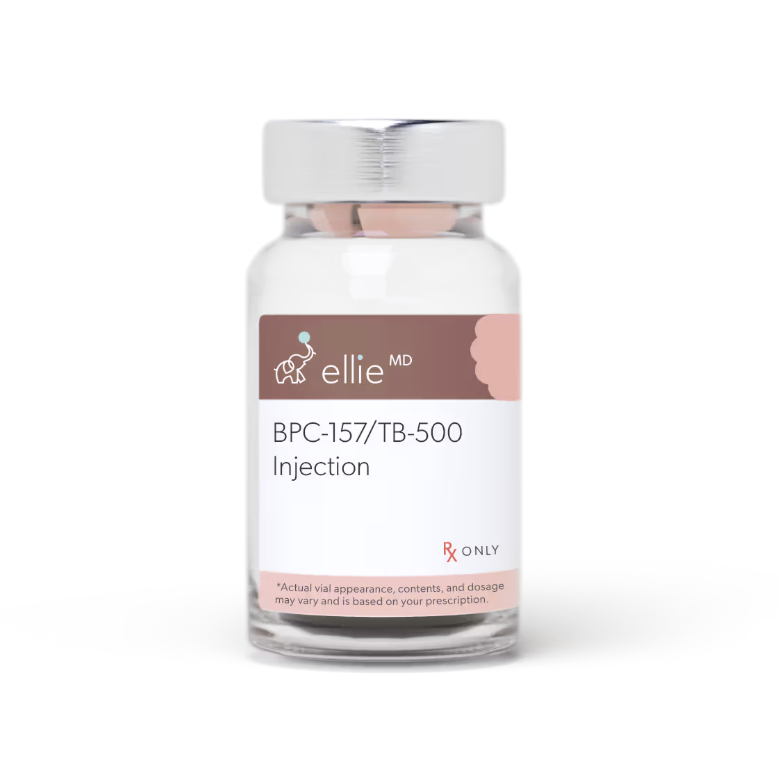
A Note on Sourcing — Why It Matters and Why I Trust Ellie MD
I need to say this clearly: not all BPC-157 is created equal. The peptide market right now is flooded with products that vary wildly in purity, potency, and safety. Some are sold through unregulated online retailers with no quality control, no medical oversight, and no way to verify what is actually in the vial. That is not root cause medicine. That is a gamble.
Sourcing is everything. If you are going to use a peptide — especially one you are injecting — you need to know exactly where it came from, how it was compounded, and who is standing behind it.
That is why I work with Ellie MD.
Here is what sets them apart. Their peptides are compounded through a 503B outsourcing pharmacy — which is the highest standard of pharmaceutical compounding in the United States. A 503B pharmacy operates under FDA oversight with the same manufacturing standards as large-scale drug manufacturers. That means batch testing, sterility protocols, and potency verification on every single product.
Beyond the pharmacy quality, what I love about Ellie MD is the full medical infrastructure built around the product. Every patient goes through a medical screening before they receive anything. There is physician oversight throughout the process. And they offer free dosing support — so you are never guessing about how much to take, when to take it, or how to administer it. That kind of guidance is rare in this space, and it matters enormously.
Consistency is the other piece. Every time I order from Ellie MD, I know exactly what I am getting. Same quality. Same purity. Same results. When you are recommending something to clients — and using it on your own family — you cannot afford variability. I need to trust the source completely, and I do.
If you are exploring BPC-157 or any peptide protocol, please do not cut corners on sourcing. Work with a practitioner who understands quality. And if you want to explore Ellie MD specifically, I am happy to walk you through it.
Disclaimer: This blog post is for educational purposes only and does not constitute medical advice. BPC-157 is not FDA-approved for human use and is considered investigational. Always work with a licensed healthcare practitioner before beginning any peptide protocol. This information is not intended for residents of New York, New Jersey, or Rhode Island.